Peptide Pureness Overview 98%, 99% & Research-grade Discussed Prg
Peptide Purity & Quantitation Testing
The table listed below web links usual project goals to useful logical panels and the sort of choices they help sustain. Asparagine and glutamine residues can undergo deamidation, altering the peptide's charge and hydrophobicity. Deamidation is one factor storage space problems issue, specifically after a peptide has actually been reconstituted. Every product we bring is lab-tested and verified by third-party partners, so researchers know exactly what they're working with. Peptides including methionine or cysteine deposits are susceptible to oxidation. Methionine can be oxidized to methionine sulfoxide; cysteine can develop unwanted disulfide bonds or be oxidized to sulfinic or sulfonic acid derivatives.Explore our directory to see confirmed study substances and discover more regarding our testing and quality control process. Even small pollutants can modify outcomes, decrease reproducibility, or introduce undesirable variables right into a study. Scientists depend on exact, validated substances to ensure their searchings for are both valid and regular.
Creative Peptides recommends a collection Helpful site of various pureness levels to assist you pick the right peptide purity for peptide-based assays and applications. The following list shows the recommended peptide purity degrees needed for different peptide applications. Peptide identification is largely done using mass spectrometry (MS), which gives exact measurements of peptide molecular weight. Additionally, techniques such as amino acid evaluation and HPLC are utilized to validate the peptide's identity and purity, making sure accurate characterization for different applications. We supply peptide identification confirmation using mass-based techniques picked for the sample and logical objective. This is necessary when the primary inquiry is whether the observed part matches the desired peptide or whether an adjustment has actually been incorporated as anticipated.Pinnacle Research Laboratory Editorial Group
Each peptide has actually a Check out this site various expected molecular weight, so mass verification is not a generic badge; it is compound-specific evidence. For a deeper identity-focused explanation, see Mass Spectrometry Peptide Confirmation. Identification testing validates that what was synthesized is in fact the intended sequence.- You can learn more regarding our analytical testing methods on our testing and quality page.
- In other words, the pureness percent has to do with the make-up of peptide species in the sample, not the weight contribution of water or salts.
- By using outside labs for confirmation, suppliers get rid of prejudice and promote scientific reliability.
It is one reason correct peptide storage space and reconstitution methods matter. Partial peptide fragments can arise from incomplete synthesis or post-synthesis degradation. These pieces are generally smaller than the target peptide and might elute at various retention times.

What Is Hplc? The Fundamental Concept
Straight from the synthesizer with very little processing-- generally simply cleavage from the resin and rainfall. Purity ranges widely, from 40% to 80%+ relying on sequence size and difficulty. Crude peptides are suitable for applications where pureness isn't vital, such as antibody manufacturing or first screening assays where the target peptide just needs to be existing, not leading. Very closely related to truncations, removal peptides are unabridged chains that are missing one amino acid someplace in the center. If topping isn't flawlessly efficient, an uncoupled chain can remain to lengthen in subsequent actions, creating a peptide that's just one residue short of the target.
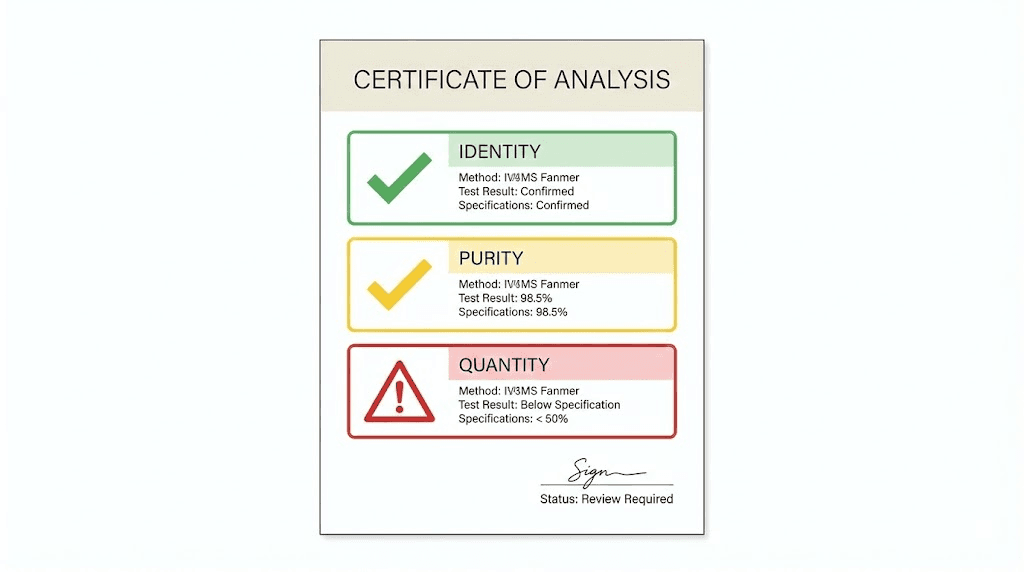
If the COA details "total contaminations", that matches the pureness number (e.g., 98% pureness suggests 2% total pollutants). Lots of COAs likewise define known or "defined contaminations" versus undefined ones, each with their specific portions if over a particular limit. This level of detail helps scientists recognize if any small peptide spin-offs exist. If you see several huge heights of comparable height, you're checking out either a low-purity sample or a combination. If the major optimal has a visible "shoulder"-- a bump on one side-- that often indicates a carefully associated pollutant (like a deletion peptide) that the column couldn't totally solve. The peptide is travelled through a basic purification step (commonly gel filtration or a fast reversed-phase cleaning) to eliminate salts, small-molecule byproducts, and scavengers from the cleavage step.